
 Cirrus SR22 |
The good news for 2013 is that a new model was added to the production ranks late in 2012. The bad news is that it’s a former LSA, the Cessna 162. In a sense, another model was reintroduced in the form of the Liberty XL2. Liberty was substantially revived by a huge 200-airplane order, all aircraft to be built at a new plant in China. Liberty produced only three airplanes in 2011, but the Chinese order reconfirmed that the product remains viable.
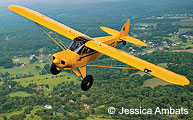
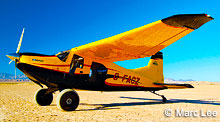
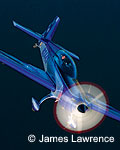
What we’ve labeled Adventure Aircraft are those models most often flown for fun, utility or both. These are frequently the heavy haulers that can be used for off-airport operations, often mounted on floats or skis. They’re also the fun machines that teach us aerobatics or just allow us to play on weekends. These are airplanes that don’t necessarily demand long paved runways (or any runways at all), heavy loads of avionics or tricycle gear. Perhaps unsurprisingly, our Adventure Aircraft is the largest of the single-engine classes. (Wonder if that says anything about the general aviation market.) Have fun!
Cessna Aircraft
www.cessna.com
Cessna 162
Cessna had grand hopes for their model 162 LSA, but the economy played havoc with sales of a good airplane. The company intended to build 600 airplanes the first year (2009), and claimed they had 1,000 confirmed orders, but instead, they delivered only 30. As of August 2012, total deliveries were 267, and Cessna decided the 162 needed to be a production aircraft. In some respects, the 162 is a better machine than the 152. Cessna’s newest single has a better glide ratio, improved visibility and arguably quicker cruise, plus it’s a more comfortable airplane than the 152. Price: $149,000.
 Cessna 172 |
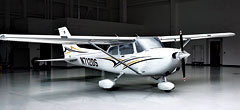
Cessna 172
Skyhawks are forever—or so it seems. As practically everyone’s idea of everyman’s airplane, the current 172SP is still a standard bearer for Cessna. Upgraded to 180 hp, the Hawk has a little more enthusiasm in climb and about 120 realistic knots in cruise with a full load, if anyone cares. More important, the venerable 172 (how could it not be venerable after 50 years in production?) is universally regarded as the most docile of trainers and most versatile of family airplanes. Price: $307,000.
 Cessna 182 |
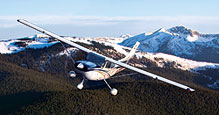
Cessna 182/182T
It seems Cessna can do little wrong with the reliable Skylane. Long regarded as one of the best four-seat family airplanes in America, the 182 dates back the same half-century as the Skyhawk. With performance in the small retractable class, the Skylane is everyone’s friend. Count on 135 knots across the ground following a near-1,000 fpm climb. A turbo ups the base ante $45,000 but also improves performance dramatically, making travel in the lower flight levels fast and efficient. The new Diesel Skylane is expected to be certified by the time you read this, and Cessna hopes to begin deliveries in the second quarter of this year. Prices: 182 $398,100; 182T $443,500; Diesel $515,000.
 Cessna 206 |
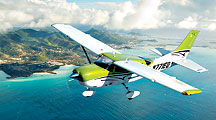
Cessna 206/206T
It seems Cessna can do little wrong with the reliable Skylane. Long regarded as one of the best four-seat family airplanes in America, the 182 dates back the same half-century as the Skyhawk. With performance in the small retractable class, the Skylane is everyone’s friend. Count on 135 knots across the ground following a near-1,000 fpm climb. A turbo ups the base ante $45,000 but also improves performance dramatically, making travel in the lower flight levels fast and efficient. The new Diesel Skylane is expected to be certified by the time you read this, and Cessna hopes to begin deliveries in the second quarter of this year. Prices: 182 $398,100; 182T $443,500; Diesel $515,000.
 Cessna Corvalis |
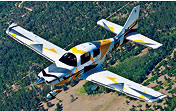
Corvalis TTx
Cessna’s only low-wing piston model is the fastest single-engine production airplane in the world—period. It’s also a remarkably sophisticated machine, the top of the Cessna piston line, and the numbers are so impressive, it could even serve as a step-up airplane to the Mustang jet. The TTx incorporates the Garmin G2000 with touch-screen capability and the G700 autopilot. Full-fuel payload wasn’t impressive, only 328 pounds on the airplane I flew last summer in Wichita, but speed was 225 knots up high, an easy 200 knots at breathable altitudes. Price: $733,950.
Cirrus Aircraft
www.cirrusaircraft.com
 Cirrus SR20 |
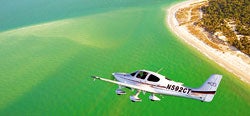
Cirrus SR20
The company’s first production product and its entry-level airplane is the SR20 in any configuration you wish, from trainer to lux cross-country cruiser. Either version uses the six-cylinder Continental IO-360ES engine, rated for 200 hp. The SR20 and the later SR22 are a tribute to the work of Dale and Alan Klapmeier in designing a single that side-stepped the two greatest concerns of aspiring pilots: 1. What do you do if the engine quits? and 2. What happens if I get lost? The answer to question 1 was the Cirrus Airframe Parachute System, a whole-aircraft parachute designed to lower the airplane to the ground at 18 fps. Question 2 was addressed with one of the first, large Avidyne MFDs in the industry, providing a moving-map capability that made it next to impossible to lose your orientation. The SR20 offers an 850 fpm climb and a 155-knot cruise. Price: $299,900.
Cirrus SR22/22T
This is the most popular airplane in general aviation, and it’s not hard to understand why. Styled with a luxury interior designed after a BMW 5-series sedan, side stick controls and twin cabin doors, the SR22 is a comfortable ride for an hour or a day. With a 310 hp Continental IO-550 on the nose (with or without turbocharging), the SR-22 covers practically every base. Cirrus sold some 207 normally aspirated and turbocharged SR22s in 2011, and if any model can prevail in the current adverse economic and political environment, the SR22 is the one. Price: $449,900.
Diamond Aircraft
www.diamondtaircraft.com
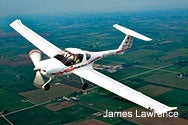 Diamond DA20 |
Diamond DA20 Eclipse
This Austro-Canadian machine is perhaps the most fun trainer on the market, with more than its share of original thinking. It uses a conventional joystick for roll and pitch control, you can board from either wing and the Continental IO-540B engine cranks out 125 hp, delivering a whole lot more than 125 knots (more like 137 knots). Until 2007, Embry- Riddle provided a fleet of DA20s to the U.S. Air Force Academy with smaller fuel tanks and all flight instruments on the right side to simulate the Air Force’s HOTAS (Hands On Stick And Throttle) principle. The Eclipse is spinnable with flaps full up, offers a higher glide ratio than any of its competition and a bubble canopy for excellent visibility. Its 26G seats don’t adjust, but the rudder pedals do, the better to accommodate long-legged pilots. The DA-20 isn’t IFR certified because of lack of lightning protection, though it may still be used for IFR training under the hood in VFR conditions. Price: $179,800.
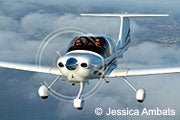 Diamond DA40 |
Diamond DA40/XLS Star
The Star is a DA20 with a hormone injection and two extra seats. It features something you won’t find in most other (make that any other) four-seat, piston singles— a back door. Like its little brother, the Eclipse, the Star flies with a stick, and a separate, aft-left boarding door for back-seaters. All riders board over the leading edge of the wings rather than the training edge. Power is the virtually unbreakable 180 hp Lycoming IO-360 mill, blessed with a TBO of 2,000 hours. Originally offered with a fixed-pitch prop, the Star began offering a constant-speed Hartzell in 2006 and a three-blade semi-scimitar MT composite prop with the XLS upgrade. A few years ago, Diamond also introduced improved wheel fairings and the Power Flow-tuned exhaust system, an aftermarket mod that really works and boosts cruise to at least 147 knots. Garmin’s G1000 glass cockpit is standard equipment. Price: $359,800.
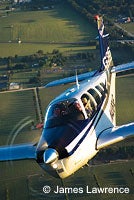 Bonanza G36 |
Hawker Beechcraft
www.hawkerbeechcraft.com
Beech G36 Bonanza
Depending upon when you start measuring, the Bonanza may be the oldest airplane in continuous production. Its ancient ancestor, the “straight” model 35 V-tail Bonanza, premiered in 1946. The original four-seater flew behind a 185 hp Continental engine and ahead of a V-tail; today’s six-seat model flies with a 300 hp Continental, a conventional tail in back, plus a Garmin G1000 glass panel that would do a Space Shuttle proud. Bonanza specs haven’t changed much over the years, but if you start with good numbers, change isn’t all that necessary. Price: $765,900.
Liberty Aerospace
www.libertyaircraft.com
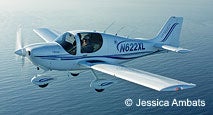 Liberty XL2 |
Liberty XL2
Derived from the Europa XS motorglider, the XL2 is a wider, taller, two-seat airplane, with modified landing gear and a Continental IOF-240B, FADEC-controlled engine driving an MT composite prop. Intended primarily as a trainer, the XL2 features an all-metal, laminar flow wing with a composite fuselage, a 4130 chromoly tricycle gear and a Piper-style stabilator rather than an elevator. Fuel is contained in a single, 28-gallon, fuselage tank, so the system is either on or off. Cruise is 113 knots, and stall is an insignificant 50 knots. After selling only three airplanes in 2011 and none in 2012, the Chinese order of 200 XL2s certainly should revive the airplane’s prospects. All airplanes in the new order will be built in China. No price had been announced at press time.
Piper Aircraft
www.piper.com
 Piper Archer TX/LX |
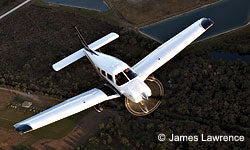
Piper Archer TX/LX
After its brief aborted flirtation with an LSA trainer, the Piper Sport, the company’s entry-level airplane has settled down to the Archer TX/LX. The two designations describe a trainer and a luxury version respectively. The trainer version comes with teaching machine avionics, while the LX model adds a Garmin G500 glass PFD and upscale trim. Both offer the same performance—800 fpm climb and a 130-knot cruise at 7,500 feet. Perhaps foremost of the Archer’s talents, however, is its docile nature for student pilots and old-timers, as well. The stall is practically non-existent, and landings make everyone look good. Price: $319,200.
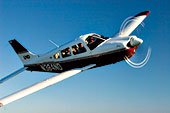 |
Piper Arrow
The Arrow is currently the only complex trainer available from an OEM. It’s also, more than coincidentally, the most benign retractable in the sky, partially owing to its lineage with the Archer. The Arrow IS essentially an Archer, but with the addition of a constant speed prop, 20 additional hp and folding gear, it comprises a class of one. If you’re looking for a light, production, single-engine retractable, you’ve just found it. (Yes, there’s the G36 Bonanza, but that’s hardly a trainer.) Price: $414,900.
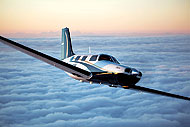 |
Piper Matrix
An unpressurized, semi-economy clone of the Mirage, the Matrix gains about 190 pounds of payload by forgoing an inflatable cabin. Weight loss has become the goal of practically every manufacturer these days, and the Matrix incorporates a simple solution. It also costs about $130,000 less and is blessed with the same power and gross weight, so it’s not surprising that the Matrix achieves all the same performance goals as the Mirage, while carrying one more person (for a total of four with full fuel). Price: $903,800.
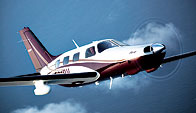 |
Piper Mirage PA46-350P
Everyone’s friend and the airplane that almost single-handedly kept Piper afloat in the volatile 1990s, the Mirage is the only production, pressurized, piston single on the market. Though it doesn’t look that much different than the original, Continental-powered Malibu, the Mirage’s Lycoming boasts an extra 40 hp and an additional 200 pounds gross weight. Reliable cruise is 210 knots following a 1,000 fpm climb for the first 10,000 feet or so. Like all turbocharged aircraft, the Mirage does its best work in the flight levels, but owners in a recent survey reported operating at 17,500 feet MSL or below most of the time where cruise is still 200 knots. Price: $1,037,400.
Adventure Aircraft |
|||
| American Champion www.amerchampionaircraft.com
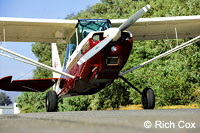
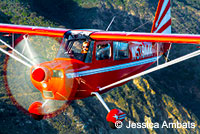
Champ Aurora Adventure (Citabria) Explorer/High Country Explorer Denali
Super Decathlon
Scout |
|||

Adventure Aircraft |
|||||
| Aviat Aircraft www.aviataircraft.com
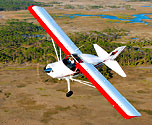
Husky A-1C
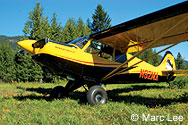
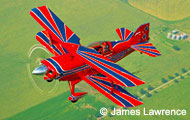
Pitts S2C CubCrafters
Top Cub Expedition Aircraft
Found Expedition Extra Aircraft
Extra 300/330 |
|||||
Adventure Aircraft |
||||
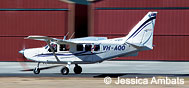
| Gipps Aero www.gippsaero.com
Gipps AV-8 Air Van Maule Air
Maule M9-235 Peterson’s Performance Plus
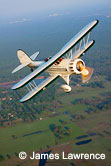
King Katmai Waco Aircraft Great Lakes 2T-1A Advertisement
Waco YMF5-D Interested in regular updates from Plane & Pilot?Sign up for our free newsletter to receive aircraft news, product information, pilot talk and more. |
||||