

|
|
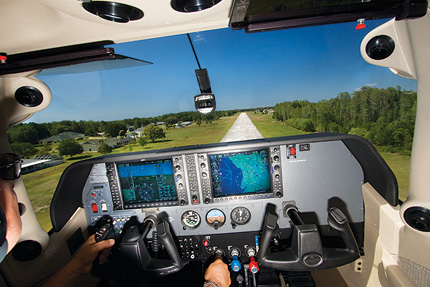
Earlier this year, the NTSB released the findings of a special study that they conducted comparing glass-cockpit aircraft and similar conventional, or “round dial,”-equipped aircraft. The purpose of the analysis was to determine if the “transition to glass-cockpit avionics in light aircraft would improve the safety of their operation.” It’s likely that this study stemmed from the GAMA report that in 2006, 90% of all new piston aircraft were equipped with flat-screen avionics. The investigation also may have been prompted by anecdotal evidence that flying glass is somehow harder or more dangerous than conventional flying—as if Avidyne and Garmin glass displays could be likened to rogue computers such as the HAL 9000 of 2001: Space Odyssey. But after much hoopla, media retort and blog discussions, essentially the NTSB report tells us nothing we haven’t known all along. What’s problematic, though, is that they present their findings in a skewed way leading one to believe, at least in part, the nonsensical notions that glass is more dangerous than round-dial aircraft.
It’s important to look at how the study was conducted to confirm the soundness of the methodology used. We’ve all heard compelling results of studies or polls that later turn out to be proven wrong or erroneous. This often is caused by researchers using poor technique when inquiring into the subject at hand, or worse, making claims that go beyond what can logically be construed from collected data. Furthermore, if a study is comparing apples to oranges, it’s invalid.
 A recent NTSB study concluded that glass-cockpit aircraft were no safer than conventional instrument aircraft. Their recommendation for training on specific equipment is necessary to realize the safety potential of glass cockpits. |
The NTSB made some stretches that compromise their findings. The premises of the NTSB conclusions rely heavily on data they accumulated through surveys of pilots of both glass and conventional general aviation aircraft in 2006 and 2007. These surveys asked for summaries of how the aircraft were used and the number of hours they were flown. However, only 24.7% of conventional aircraft users and 33% of glass users responded. According to the University of Texas, a minimum of 50% response rate is necessary for sound data when using mail surveys and a minimum of 40% is necessary if the survey is done via e-mail. So probably the most critical component used to calculate the accident rate used in the study, the number of hours flown, was deficient.
Furthermore, the NTSB made no effort to ensure the compatibility of accident circumstances. Simply, they compared apples to oranges. Glass airplanes are generally flown farther than conventional aircraft, deal with different weather conditions, are typically flown by a different pilot cohort, and tend to be used less for instructional flights than round-dial types. Is it fair to compare fatality rates of aircraft flown in IMC versus those flown in VMC, then say, “Aha! Those airplanes that are flown in IMC are more dangerous”? Of course not. Numerous previous studies have shown that flying in IMC is inherently more deadly than in VMC.
The NTSB study looked at 2,848 conventional and 5,516 glass aircraft that were built from 2002 to 2006. There was a wide range of aircraft included in the study, but the big names were Cessna, Cirrus, Diamond and Piper. Then the accident rates of these aircraft from 2002 to 2008 were analyzed. A total of 141 accidents occurred in conventional aircraft and 125 in glass. So which is safer? On the surface, the conclusion is obvious—glass: There were 125 accidents among 5,516 glass airplanes versus 141 accidents among 2,848 conventional aircraft. Unfortunately, it’s not fair simply to just count accidents nor is it fair to calculate an accident-per-airframe ratio. Why? Because if 5,000 of those glass airplanes were sitting in the hangar the whole time, we might change our opinion on their safety. So, accident rates per 100,000 hours are calculated to level the playing field.
Keeping in mind that although incomplete hour estimates were used to come up with the following numbers, they do provide some insight into the safety of glass versus conventional airplanes (also note that the response rate was better for glass users, therefore, in theory, those numbers should be a better reflection of reality than conventional numbers). Between 2006 and 2007, the accident rate (per 100,000 flight hours) in glass was 3.71 and for conventional it was 3.77. So glass airplanes (or at least this group of them) were, overall, safer. However, the fatality rate says something different. Among glass aircraft, the fatality rate was 1.03 (per 100,000 flight hours), but the conventional cohort had a rate of 0.43. Before passing judgment, it’s important to determine if they’re comparing apples to apples.
 The many advantages of glass come at a cost other than money: time. Time is required for training in order to develop proficiency.
The NTSB identified several attributes concerning the way glass airplanes are flown, and by whom, that differ from round-dial aircraft. One is that glass airplanes are significantly more likely to be flown on an IFR flight plan and thus are logically more likely to encounter instrument meteorological conditions. Another is that glass airplanes are significantly more likely to be conducted on personal or business trips, while conventional tend to fly on a lot more instructional flights than glass types. The highest certificate held in glass is most likely to be a private, while in a conventional aircraft included in the study, there were many more student pilots in the mix. So from the start, you can see that the two groups that were evaluated aren’t at all comparable.
What’s the solution? Compare glass aircraft to other aircraft that are being operated in a similar manner. Looking to the 2009 Nall Report (that looks at the previous year’s stats), data can be extracted to use for a more reasonable assessment. Considering glass aircraft are used more for personal and business trips, it would be wise to compare glass accident rates to other aircraft flown on such trips. The general aviation fatality rate among personal and business flights was 1.89 overall versus that of glass which was 1.65. Not bad. The lethality of glass crashes, the likelihood you’ll die if you crash, was 31.2%. That sounds bad, but we need to put even this in perspective. Considering that glass airplanes are flown in instrument conditions more often, one would expect their lethality to be more similar to aircraft involved in accidents under those conditions than in general. The lethality for IMC accidents in 2008 was 75%. So the 31.2% for glass doesn’t look so appalling when the way the aircraft is normally flown is considered. Also, private pilots are involved in 50% of all accidents of which 52% are fatal. Student pilots, on the other hand, were involved in only 8% of accidents, of which 3% were fatal. Again, when considering most glass are flown by private pilots, one would expect a lethality rate higher than the entire accident population and more similar to that common among the type of pilots flying the aircraft.
What does all of this mean? First, the NTSB provides some great fodder for discussion. They conclude that we need better training for glass. I doubt anyone can disagree with that. But I truly believe that glass, in the hands of a competent, well-trained pilot, has the potential to make flying safer. A moving map with terrain and weather on it certainly can boost situational awareness. The NTSB report also purports that glass is somehow not as safe as similar make and model round-dial aircraft, primarily leaning on the fatality rate to make such a claim. Yet it’s hard to argue with the raw numbers that indicate glass aircraft are, in fact, safer than the average of general aviation and among aircraft flown under similar circumstances.
Improving Safety In Glass CockpitsBy Tim Decker |
| During the last eight years, the majority of GA aircraft, including Cessna, Cirrus, Diamond, Mooney and Piper, have switched from traditional analog cockpit instrumentation to glass cockpits. Many older aircraft are being retrofit with modern avionics that include IFR-approved GPS units, autopilots, primary flight displays (PFDs) and multifunction displays (MFDs), which give many of the same safety advantages that glass cockpits offer. However, a recent NTSB study concluded that glass-cockpit aircraft were no safer than conventional instrumented aircraft. Advertisement
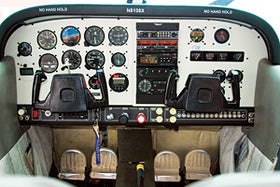
Disadvantages of traditional analog instrumentation are the multitudes of mechanical components: gyroscopes, delicate flywheels, gimbals, seals and motors. Diaphragms, tubes, gears, springs, pins, needles, pointers and housings make up other mechanical instruments. Gyroscopes lose accuracy during flight, and mechanical components wear out. Frequently repairing or replacing analog instruments is expensive. One principal advantage of glass cockpits is the elimination of these delicate mechanical components. Instead, solid-state electronics found in glass cockpits are more reliable and less prone to wear and degradation because of normal aircraft operations. The close grouping of the traditional “six pack” (airspeed, attitude, altimeter, turn & bank, heading, vertical speed) into a single display in a glass cockpit makes for a faster and more efficient cross-check. The addition of GPS, weather, airspace and traffic information adds to the pilot’s situational awareness and increases safety. All this is terrific, but a phenomenal improvement to safety that comes with glass is the solid-state Attitude Heading Reference System (AHRS), which is exponentially more reliable and accurate than vacuum-pump-driven attitude and heading systems. The many advantages of glass come at a cost other than money: time. Time is required for training in order to develop proficiency. The NTSB recommendation for training on specific equipment is critical to realize the safety potential of glass cockpits. Advertisement
A VFR pilot transitioning from steam gauges to glass needs to be comfortable with quickly finding and processing the traditional six-pack instrument indications, as well as engine, communication and navigation information on the PFD and MFD. An IFR pilot requires the same, plus an excellent understanding of how to use navigation and autopilot functions. Without familiarization training, a simple change of a radio or navigation frequency can cause confusion, distract the pilot and take longer than using a stand-alone radio in a traditional cockpit. Entering a flight plan in the GPS and knowing how to quickly add or delete points in-flight require more training, and is essential for safe flight, especially in busy airspace or deteriorating weather conditions. For the instrument pilot, an ATC clearance to intercept a Victor airway from an assigned heading is fairly simple using conventional instruments—tune the VOR frequency, dial the airway course, stay on heading until the VOR needle centers and then turn to keep the needle centered. Doing this same task using an IFR-approved GPS can be just as simple, but requires a completely different set of steps to accomplish—highlight the second waypoint of the intercept airway on the GPS flight-plan page, press the Direct button twice and press Enter to accept the “Fly leg X to Y?” message (Garmin 430/530/1000). Additional training is required in order to make the autopilot fly this autonomously, even though it’s very similar to autopilot intercept of VOR course (instead of GPS course). Is the glass-cockpit training worth it? Definitely! Flying a conventionally equipped aircraft with a vacuum-driven attitude indicator and only dual VORs and possibly DME in hard instrument conditions is difficult and limits useful information available. A PFD and MFD combination displaying a moving map, terrain, weather and traffic information increases situational awareness tremendously. The added benefits of more reliable equipment is icing on the cake. Advertisement
For pilots considering an upgrade to a glass cockpit who want to reap the numerous advantages of modern avionics, there are numerous training options. Many suppliers provide Internet-downloaded trainers free of charge, and there are free online interactive courses. Commercial DVDs and simulator training are extremely useful, too. Most importantly—realistic flight training using the specific system in busy airspace during less-than-ideal weather with an experienced glass-cockpit flight instructor is a must. Tim Decker (timdeckerairshows.com) is an ATP pilot with CFI, CFII, and MEI ratings and has thousands of hours in the F-117, U-2 and other aircraft. |


