
 |
The big secret in aviation is that just about everybody goes into it because it’s more fun than should be legally allowed, and not because it’s practical.
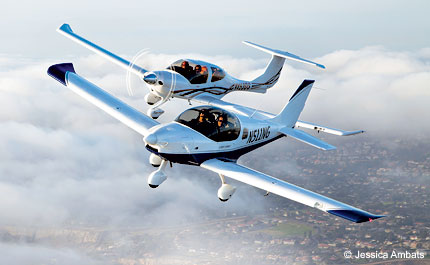
Oh sure, you can certainly fly a Cirrus with a small family on a vacation trip, laughing at those poor folks crawling along on the interstate below you while you zip by at 170 mph, but in the cold light of day, it’s not the cheapest thing to do, you can’t carry much and weather is a constant, nagging factor.
People fly airplanes because nothing beats the experience of flying yourself somewhere. As pilots, the things we see, the sensations we experience and the rewards we feel going from one runway to another are indescribable. The cost is just something we accept and deal with, like a pebble in our shoe on a long walk, except the shoe won’t come off.
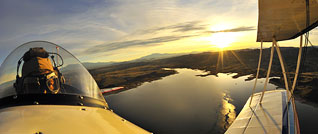
Watching the sun disappear into the Pacific Ocean on a recent evening, I was alone in my airplane, just above a broken deck of the softest cumulous imaginable. I was there for the pure fun of it, without a single purpose or reason.
As the setting sun’s rays charged along the cloud deck, shafts of amber light would appear and disappear, casting brilliant highlights against different parts of the clouds.
Suddenly, one of the rays washed over my face. I felt the warmth from the sun and squinted inreaction to the brightness. I watched as the ray painted my entire airplane, sweeping it in slow motion with changing light.
It was a moment of clarity, as if to tell me, “Don’t forget how fortunate you are.” I became aware that I was thinking of nothing but flying; no problems existed up there.
 |
I lingered until the sun was saying its last goodbye, and then headed back to the airport, which was as silent as I had ever seen. I heard the chirp of my tires meeting the hard asphalt runway. The worries and cares of the day had vanished like wisps of steam.
Flying like that is therapy to me. There’s something about aviating that replaces stress with peace and anxiety with calm. I wished I could bottle the feeling. To me, it’s what flying is really about.
Outsiders would say, “Well, that’s well and good that he can afford that, but we can’t.” But that flight had cost me considerably less than a round of golf. It was cheaper than a massage; a fraction of a doctor’s visit. I own the plane with a small group of pilots.
My flight cost less than a friend’s bar tab from the previous night, and less than my neighbor spends on cigarettes and beer. I’ve found that life is about priorities, and for me, flying is what keeps me sane. To pilots, flying isn’t an expense, it’s a way of living—a way to keep living.
 |
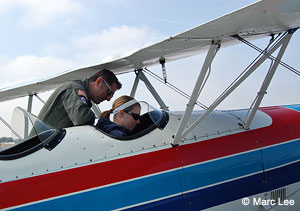
One of the most rewarding things I do as a pilot is to take people for their first airplane ride. Many of them have flown in airliners before but few, if any, have flown in small, general aviation airplanes.
I own a Great Lakes biplane, so the added thrill of an open cockpit leaves my first-time passengers with an experience they won’t likely forget.
I can see the wonder in their bare-toothed smiles as I look over their shoulder from my perch in the rear seat. I often hear, “I can’t believe you get to do this all the time!” through the intercom.
It would be great to tell you that all these people go on to become pilots, but that’s not the case. I’ve had the invigorating experience of taking high-school students for their first rides, and had one of them begin to seriously pursue a pilot career as a result.
It wasn’t my piloting that did it, it was that little strand of DNA that aviators seem to share that was waiting to be energized by the sound of a propeller and the wind flowing over flying wires.
In this student’s case, she was hooked the minute the tires left the runway, as I was the first time I flew.
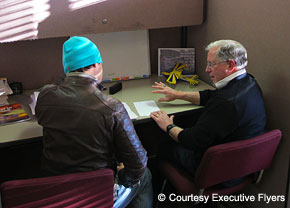
During a recent conversation with an aviation friend (a marketing manager for a major aviation manufacturer), we were lamenting the fact that fewer kids today want to learn to fly.
We agreed that aviation had lost its romance and allure, at least with the younger generation. Added to that was the cost of flying and, most interestingly, the attitude of many pilots toward newcomers. What came to light though is that there are ways around each barrier.
The sport-pilot certificate is an explosion of opportunity for those who couldn’t afford flying before. With slews of flight schools advertising sport-pilot training for under $4,000, earning that certificate isn’t a far-fetched financial goal anymore.
Related to that, light-sport aircraft (LSA) aircraft are renting in the $100/hour range at flight schools around the country. A decent used aircraft can be bought today for $20,000—the price of a modest car.
AOPA’s recent push for the creation of flying clubs is a big step (I’d call it a giant leap) in the right direction. Flying clubs make flying truly affordable to everybody and have been overlooked since the free-wheeling economic decades of the past. But today, flying clubs and shared ownership are how many of us keep flying.
Browse through the AOPA flying club listing by state (aopa.org/CAPComm/flyingclubs/flyingclubfinder), and you’ll discover scores of real-world aviation deals. Just a cursory search unearthed a flying club in Southern California (considered one of the most expensive states to fly in) offering a complete private pilot certificate (with 60 realistic training hours) for under $5,000! The sport-pilot certificate can be had for even less. The argument that “flying costs too much” is quickly becoming false.
 |
The time commitment is something everybody will have to wrestle with. Flying is serious business, and there are no shortcuts. Once again, the sport-pilot certificate offers lower complexity and much less of a time commitment.
Even the private pilot certificate is within the reach of nearly everybody. Today, there are student pilots in their 70s and older whose favorite saying is, “If I can do it, you can, too!”
Flying is safer than it has ever been, and you’d be in more mortal danger engaging in recreational boating than flying. The media’s infatuation with air crashes should be viewed with suspicion, because their sensationalism brings nothing but higher ratings.
Airplanes don’t just fall out of the sky. The leading causes of general aviation (GA) airplane crashes remain easy to avoid with nothing more than good judgment on the part of the pilot.
 People fly airplanes because nothing beats the experience of flying yourself somewhere. As pilots, things we see, the sensations we experience and the rewards we feel going from one runway to another are indescribable. The cost is just something we accept and deal with.
This brings us back to the romance of flying. During my conversation with the marketing manager, we both agreed that if people could experience aviation, they would be affected by it, even if they didn’t immediately want to become pilots.
Not everybody who flies in a GA aircraft is smitten, but the experience will leave them forever changed. Some, like my high-school student, will dive right in and become “one of us,” while others will learn to see aviation in a more favorable light than before, knowing what it means to us.
This “romance” is hard to quantify, but aviators—experienced or not—know it when they feel it. It’s that powerful realization of climbing into an airplane and becoming one with the machine, its stick an extension of your arm.
It’s seeing every runway as a gateway to adventure and the starting point of dreams and wishes. To me, the romance of flight is a leather helmet and fabric wings above a layer of puffy clouds, while to another pilot, it might be a corporate jet and the lure of exotic lands. Aviation is one of the last places where that romance still exists.
Flying is a visceral experience, and you have to do it, not read about it. If the sense of ultimate freedom doesn’t move you, then the sheer wonder of it will.
Aviation writer and pioneer Wolfgang Langewiesche once wrote, “Sometimes, I watch myself fly. For in the history of human flight it is not yet so very late; and a man may still wonder once in a while and ask: How is it that I, poor earth-habituated animal, can fly?”
Sport Pilot Vs. Private Pilot
For people who dream about flying but feel blocked by the many barriers of entry (as the industry calls them), the greatest news in aviation history is undoubtedly the FAA’s introduction of the sport-pilot certificate.
Announced in 2004 after a great deal of hard work by the Experimental Aircraft Association (EAA), the sport-pilot certificate was created by the FAA specifically to make it easier for more people to get into aviation.
The barriers to entry in aviation have always been cost and time. Since general aviation’s early days, the private pilot certificate has been the “gateway” certificate (“license” isn’t the proper term) for those who want to fly.
Whether somebody wanted to just fly around in a Piper Cub on weekends, or wanted to fly a 747 across the ocean, the first step has always been the same: earn the private certificate first, and advance from there.
The private certificate requires the student pilot to build 40 hours minimum flight time (composed of various sub-categories such as solo hours, night hours, etc.).
Although that 40-hour requirement still stands today, FAA studies show that most pilots are earning their private certificate in an average of 70-75 hours, nationwide. This is mostly due to today’s more complex airspace, regulations and cockpit technology.
The following list paints a realistic picture of the private certificate cost:
⢠Aircraft rental @$125/hour (70 hours) = $8,750
⢠Instructor @$40/hour (about 40 hours dual, the rest, solo) = $1,600
⢠Ground time with instructor @$40/hour (20 hours pre- and post-lesson instruction) = $800
⢠Ground school, computerized course or self-study materials = $350
⢠Books, accessories, charts, headset, other materials = $300
⢠Written exam fee = $125
⢠Designated examiner’s fee (for checkride) = $300
TOTAL = $12,225
These are what I call “full-disclosure” numbers, typical in most metropolitan areas. You can save money in more rural areas, or by finding an independent instructor. Some FBOs will try to lure students with a basic, 40-hour flight-time cost only, so as not to discourage them from starting.
But studies show that only about 40% of students who start flight training will continue their training to earn their private certificate. Those who quit frequently cite “running out of money” as the reason. If students knew better what the true costs would be, they could prepare accordingly.
The other factor—time investment—can’t be overlooked. Seventy hours of flight training represents about three times that amount in pre- and post-study time and exam preparation, according to most instructors.
Private pilot students can accordingly expect over 200 hours of hitting the books. That adds up to 300-400 total hours of your life that you’ll need to set aside to devote to earning the private certificate.
Here comes the sport-pilot certificate to the rescue. It requires a total of only 20 hours of flight time. Light-sport aircraft are miserly on fuel due to their smaller engines, so they’re cheaper for flight schools to operate, and thus rent to you.
The knowledge requirements are lower, too, because they’re less complex, so training and study times are reduced by comparison. According to the FAA, national training times average 30 hours for the sport-pilot certificate.
The biggest boon to would-be pilots is the medical requirement; there’s no formal medical certificate required for sport pilots. As long as you have a valid driver’s license and the DMV says you can drive, you can also fly.
In what many people call the sport-pilot “Catch-22,” the driver’s license can be used as proof of medical competence provided the prospective pilot wasn’t rejected for their last airman medical certificate. In other words, if you ever flunk your medical exam for a higher rating, you can’t fly under sport-pilot rules, but otherwise, you’re good to go.
Let’s do the sport-pilot financial picture:
⢠Aircraft rental @$105/hour (30 hours) = $3,150
⢠Instructor @$40/hour (about 15 hour = $600
⢠Ground time with instructor @$40/hour (10 hours pre and post-lesson instruction) = $400
⢠Ground school, computerized course, or self-study materials = $250
⢠Books, accessories, charts, headset, other materials = $200
⢠Written exam fee = $125
⢠Designated examiner’s fee for checkride = $300
TOTAL = $5,025
These costs are approximations based on major metropolitan areas, and prospective pilots can save money in many ways. For example, rental and instructor rates in rural areas are typically lower than in coastal cities.
Older, more basic aircraft (especially tailwheel trainers like Cubs, Champs, Cessna 140s and others) will rent for a lower rate than newer aircraft.
If you’re frugal and creative, you can save money by buying used gear and instructional materials, training often (four times a week or more), and coming prepared to each lesson, having pre-studied the day’s instruction module.
Doing so will get you closer to the FAA instruction time minimums. As I write this, I’m seeing advertisements for FBOs even offering sport-pilot certificate packages in the $3,000 range.
There are, obviously, differences in the two ratings. A private certificate will give you the foundation for more advanced ratings and airplanes.
The private certificate allows you to carry more than one passenger, fly at night, in complex airspace and in heavier aircraft.
The most compelling reason to earn the sport certificate instead of the private is if you just want to fly for the love of flying and nothing else.
Many people have no desire to get advanced ratings, and studies show that most of the general aviation population consists of pilots flying solo or with a single passenger. For those reasons, the sport-pilot certificate is a great way to join the ranks of aviators at a fraction of the cost.
| PRIVATE PILOT | SPORT PILOT | |
| Minimum training time | 40 hours | 20 hours |
| Language requirement | Be able to speak, read, write and understand English | Be able to speak, read, write English |
| Fly at night | Yes | No |
| Maximum passengers (in addition to pilot) | No limit (limited by aircraft capacity) | 1 |
| Requires FAAâmedical certificate? | Yes—third class | No—a U.S. driver’s license is adequate |
| Maximum aircraft weight | 12,500 pounds | 1,320 pounds and a maximum of two seats |
| Maximum speed | No limit | 138 mph |
| Complex airspace limitations | Can fly in Class B, C, D airspace | Can’t fly in Class B, C, or D without a written endorsement and additional training |
| Altitude restriction | None (automatically excluded from Class A airspace) | 10,000 feet (or 2,500 feet AGL in mountainous terrain higher than 10,000 feet) |
| Minimum age to earn certificate | 17 | 17 |
| Minimum age to solo | 16 | 16 |
| Written test required | Yes | Yes |
| Flight (practical) test required | Yes | Yes |
| Eligible for advanced ratings | Yes (such as instrument) | No |
| Type of aircraft | Any | Aircraft must meet LSA requirements |
| Can fly outside of the continental U.S. | Yes | No, except for the Bahamas |
Learn-To-Fly Resources |
| Every year, new resources appear to help people who are interested in learning to fly. The Internet has become the best resource for gathering information about flight-training options. There’s a wealth of free material available to anybody interested in aviation, just for the asking. Here, we list some of the most useful: faa.gov/library/manuals/aviation/pilot_handbook/media/PHAK%20-%20Chapter%2001.pdf faa.gov/library/manuals/aviation/pilot_handbook/media/FAA-H-8083-25A.pdf learntoflykit.com sportpilot.org aopa.org/letsgoflying/ aopa.org/CAPComm/flyingclubs/flyingclubfinder sportpilot.org/learn/reachforthesky.html eaa.org/learntofly |
Pilot Careers: New Ideas For A Coming Shortage |
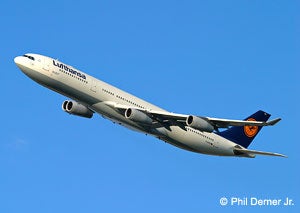 The most common question from prospective pilots is, “Are there still pilot jobs?” The answer is an unequivocal yes! Even though the media portrays a one-sided view of pilot careers (usually only discussing regional airline jobs), the truth is that the outlook for pilots has never been better. The most common question from prospective pilots is, “Are there still pilot jobs?” The answer is an unequivocal yes! Even though the media portrays a one-sided view of pilot careers (usually only discussing regional airline jobs), the truth is that the outlook for pilots has never been better.In December of 2012, the first wave of pilots reaching the maximum FAA-mandated age of 65 began retiring. That initial trickle is expected to become a downpour of pilots who are forced to leave airline cockpits. Some 2,000 pilots reached mandatory retirement during that first wave, and the pilot population will continue to decrease accordingly each year. AOPA estimates that 20% of ATP pilots are 60 or older, resulting in a big chunk of empty pilot seats. With an ever-decreasing number of people wanting to become pilots, there’s nobody to replace them. Aerospace giant Boeing published its respected Career Market Outlook covering the next 20 years. In it, the company forecast a need for 460,000 new pilots by 2031. For a detailed look at the situation, read “Airline Pilots: Coming up Short,” in the October 2012 issue of Plane & Pilot. What’s important is what the industry is doing to relieve the shortage, and how it will affect job opportunities for pilots. The shortage that the industry is predicting will hit regional cockpits first, since regional captains will be the first ones to apply for—and get —jobs vacated by retiring pilots. That will leave a gaping hole in regional cockpits, which will try to recruit instructors and well-qualified general aviation pilots to fill the gap. That, in turn, will deplete GA resources. It has happened before, but this time, the scale will be much larger. Boeing’s projections suggest a shortage like we’ve never seen. The biggest issue with recruiting new pilots is salary. It’s a well-known fact that regional airline pilots start with a salary somewhere in the low $20,000-per-year range. But, as demand increases, so will salaries. The general public probably doesn’t realize that a new pilot with a major airline starts at an average salary of $43,000 per year, and by their fifth year, that salary averages $102,000. A captain on a carrier like FedEx will retire at nearly $250,000 per year. And those numbers are based on current demand. A shortage can only drive salaries upward. Some companies, like Boeing, have launched innovative programs to address the shortage before it becomes unmanageable. Boeing is working through Jeppesen (now a unit of Boeing Flight Services) to help solve the shortage issue by starting collaborative ab initio (“from the beginning”) training programs with international airlines. Boeing now operates 21 flight-training facilities in six continents. Boeing’s training programs incorporate new technologies and methods of learning that resonate with international student pilots through curriculums developed at flight schools and universities. Jeppesen provides pilot supplies, test preparation materials, e-learning courses, training syllabus guidelines, and their well-respected IFR and VFR charts as part of a customizable training solution. Boeing then adds a Jet Bridge Program and a full-type rating for the aircraft specific to that airline, and delivers a fully-qualified and competent first officer to the airline. In Boeing’s latest program launch, they teamed with Dubai-based Emirates Aviation College, the academic wing of United Arab Emirates Airlines, to offer the first Joint Aviation Authorities (JAA)-licensed pilot training program in the UAE. Like Boeing’s ab initio programs in other countries, the 16-month curriculum includes eight months of ground and theory training in Dubai, followed by eight months of practical flight training in Lisbon, Portugal, as the first step toward earning an airline transport pilot certificate (ATP) or a commercial pilot license with single-engine and multi-engine instrument ratings. Successful cadets may also continue and earn their bachelor of science degree. Boeing’s UAE program is mirrored in Africa, Moscow, Seoul, Tokyo and others, and continues to expand as foreign demand for pilots outpaces domestic demand. “Over the next 20 years, there is a global need for hundreds of thousands of new airline pilots,” says Roei Ganzarski, chief customer officer, Boeing Flight Services. “Through partnerships like this we’re working to expand the pool of pilots from which airlines can select.” German air carrier Lufthansa has launched a pioneering ab initio training program unlike anything in the United States. Seeing the enormous need for pilots in the next two decades, Lufthansa is reaching out to zero-time, non-aviation students through popular German media outlets. Recruiting 19-29 year olds with bachelor’s degrees and fluency in German and English, the airline subjects applicants to four days of intensive psychological, medical, aptitude and academic screenings. Those who make it begin a two-year flight training program that covers all aspects of aviation, and is geared very specifically to airline flying only. The program is carefully constructed to turn out a highly qualified airline pilot, nothing else. Upon completion, the student will have amassed about 200 flight hours in an aircraft, and twice that in simulator time. Most of the flight time is in Beechcraft Bonanzas and Barons instead of the typical Cessna trainers common here in the U.S. In fact, Lufthansa’s initial training is done at their facility near Phoenix, Ariz. If the student hasn’t failed any test along the way (not even once, there are no second chances in this program), he or she is assigned to an aircrew flying one of Lufthansa’s jets. The big difference with the Lufthansa program is that it is paid for entirely by the airline! However, once employed (and there is no contract), the newly minted airline pilot is expected to pay back 15% of the $100,000 training cost. Meanwhile, the airline gets a candidate trained to their standards, their methods and their corporate philosophy. Instead of recruiting from pilots already in the industry, Lufthansa is going to the grassroots. Here in the U.S., JetBlue has created a partnership with Jacksonville University in Florida, and regional airline, Cape Air. Students take part in JetBlue’s “Gateway” program, which includes the four-year degree at Jacksonville University, a paid internship, work as a flight instructor to build experience and hours, and hands-on flying experience with Cape Air as a regional pilot. The process takes about eight years, but yields a student fully immersed in JetBlue culture and training, much like the Lufthansa model. Once the student completes all facets of the program, they will be fully qualified to interview for a training slot as a JetBlue first officer. With a shortfall of nearly 100,000 pilots by 2031, manufacturers and airlines are scrambling to create ab initio programs unlike any that have come before. For all these reasons, it’s a great time to consider at piloting as a career. For more information about the Lufthansa ab initio program, read lufthansa-flight-training.com/lufthansa-pilot/in (Lufthansa ab Initio program) and boeing.com/commercial/cmo/pilot_technician_outlook.html.
*Editor’s note: A section of this article, written almost ten years ago, has been removed. |


