

Click On This Link To View Our Complete Photo Gallery
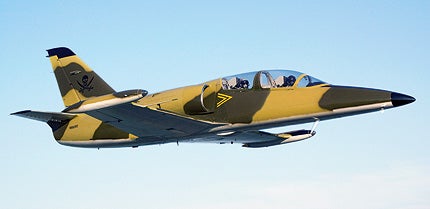 |
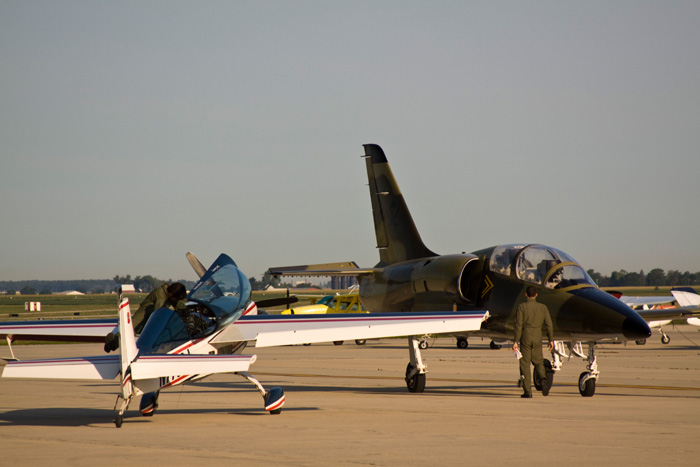
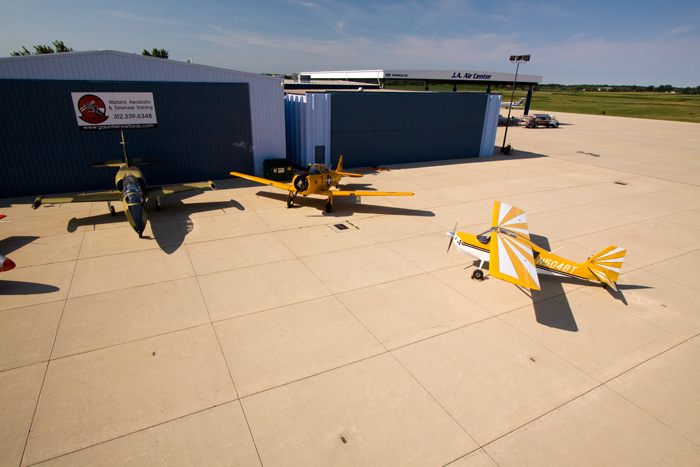
Bill Stewart, until recently a lapsed pilot, sounds like something between a fighter jock and a kid in a candy store as he recounts his latest aerial exploits on the ramp at Chicago’s Aurora Municipal Airport (ARR). Arrayed around him are a full house of the world’s best training aircraft. The two jets and three pistons represent all edges of the performance envelope: a Decathlon and an Extra 300L from the civilian aerobatic world, an SNJ/T-6 from the warbird taildragger school, and from the other side of the Iron Curtain, two Czech-made military jet trainers, an L-29 Delfin and L-39 Albatros.
“I’ve flown every one of these airplanes, and I got the type rating to fly the L-39,” says Stewart, a retired commodities trader. “It’s a little Walter Mitty, but the fact is, it’s real. You can come out here and fly around in fighter jets—I’m having the time of my life.”
We’re standing in front of the fleet’s home, Gauntlet Warbirds (www.gauntletwarbirds.com), founded in 2005 to provide pilots of any skill level with the training required to fly jet and high-performance piston warbirds. “And the training isn’t as difficult as many assume,” Gauntlet’s chief pilot and guiding light, Greg Morris, tells me in the school’s briefing room. Small replicas of the fleet’s aircraft are mounted on sticks (used to illustrate and dissect maneuvers) and hang kitty-corner to a whiteboard wall with sketches of airplanes in unusual attitudes.
 “People see all these cool jet warbirds, and they think, ’I wasn’t in the military,’ or ’I don’t fly for the airlines,’ or ’I don’t have thousands of hours of tailwheel time, so I can’t fly those things.’ And that’s absolutely wrong,” says Morris. “We wanted to make a place that helped people achieve their [warbird flying] goals, and get more people into this sort of flying.”
Morris feels that the need for such training has grown as a new generation of relatively inexperienced owners succeeds the ex-military and -airline pilot types who have previously dominated the warbird pilot corps: “We’re seeing this market change. Professional pilots are selling airplanes, and a lot of warbirds are being sold to nonprofessional pilots.” Gauntlet’s president and owner, Mark Roche, is a good example.
“I got my private pilot’s license in a typical Cessna 172, but I was always interested in World War II warbirds,” Roche says. “I had a passion for World War II history, and I always said I wouldn’t get into flying seriously without owning a warbird someday.”
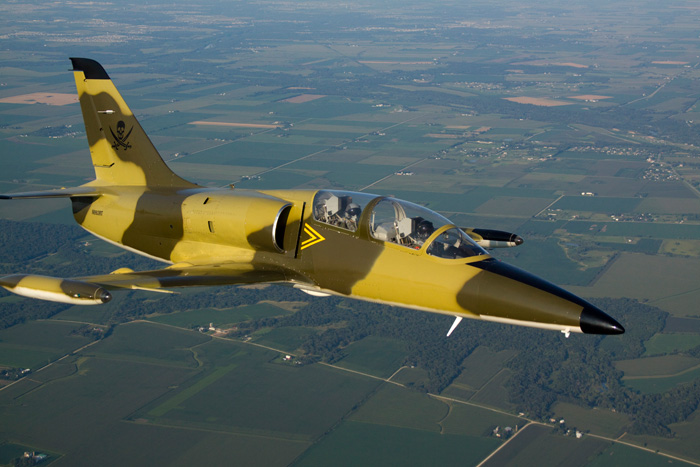
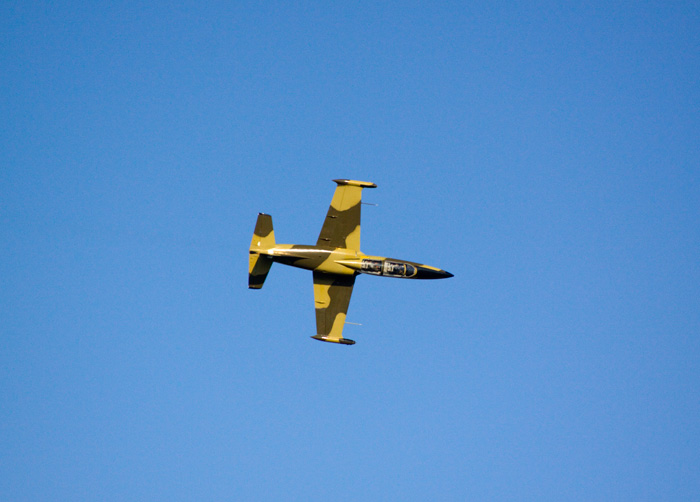
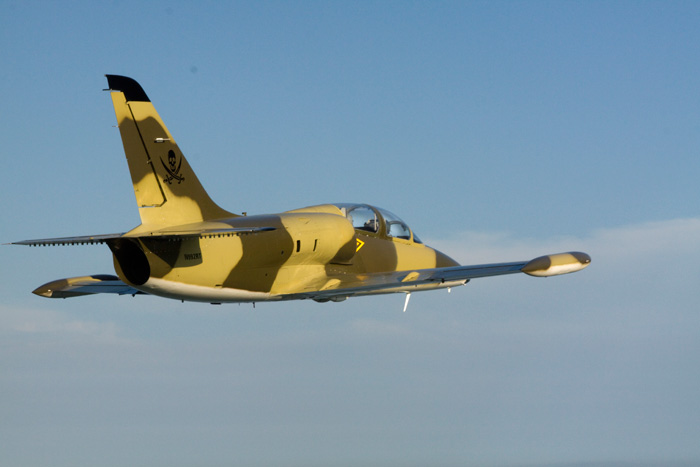
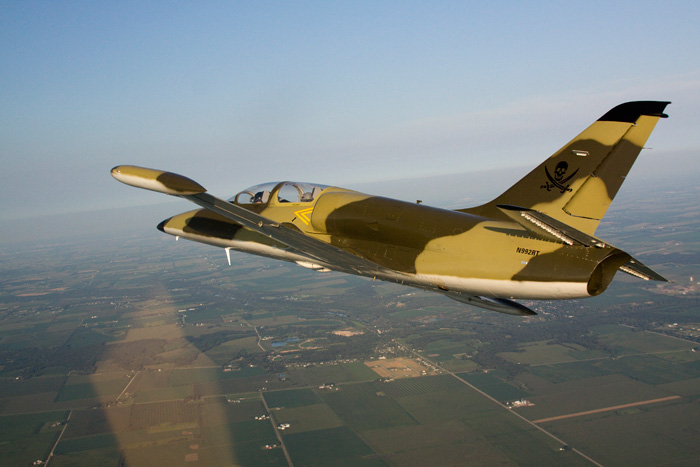
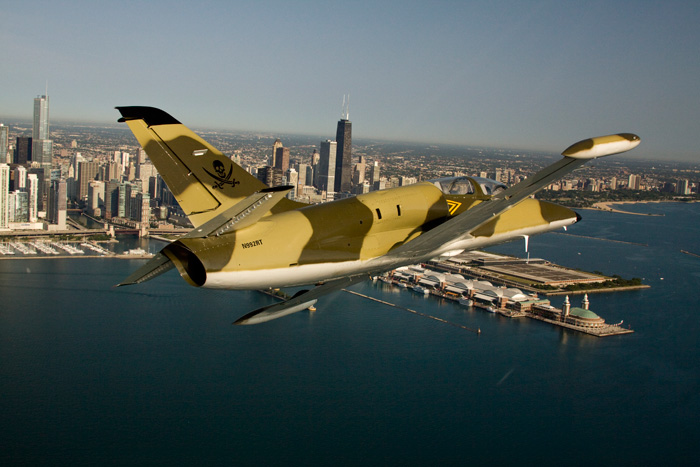
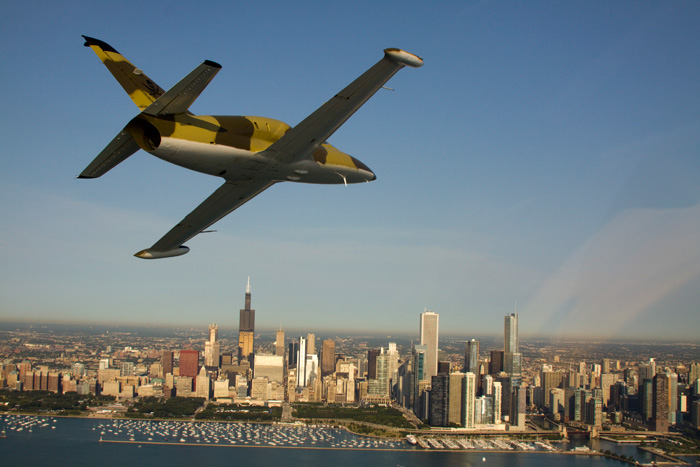
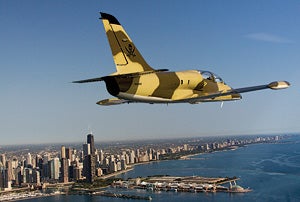 The L-39 flies over Chicago and Lake Michigan. Gauntlet offers training in both the L-29 and the L-39, as well as in its T-6, Decathlon and Extra 300. |
About five years ago, Roche, an investment banker, came to Morris with some 350 total hours, no tailwheel time and an urge to buy a T-6. At the time, Morris was the only tailwheel instructor in the Chicago area. Soon after Roche started lessons, he purchased his coveted warbird, and the two worked out a deal: Morris would get transition training in the T-6 and then instruct Roche. But Morris found the training syllabus deficient and developed his own T-6 curriculum, complete with phase checks. Soon, Morris was fielding requests for T-6 instruction from other students. From those roots, Gauntlet grew.
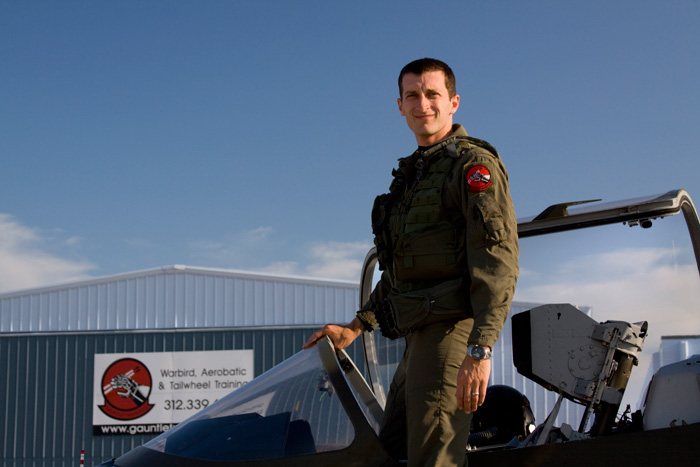
Dressed in his flight suit, Morris, not yet 30, exudes the focus, mission orientation and esprit of the military pilot he always dreamed of becoming. But with eyesight below military pilot specs, he earned a degree in aerospace engineering from the University of Southern California instead, teaching aerobatics on the side. After graduation, he made his way back to his hometown to offer the basic instruction that forms the foundation of Gauntlet’s training.
“Tailwheel and aerobatics really are the gateway to all these aircraft,” Morris says of the jet transition. “If you get a good, solid 20 to 25 hours of tailwheel time and some aerobatic experience, you can fly these.”
Earlier that day, we had done an introductory walkaround of the Gauntlet fleet. Strong, responsive and forgiving, the 150 hp Bellanca Decathlon is an ideal platform for tailwheel and basic aerobatic instruction. Certified to +6/-5 G’s, a pilot can learn all maneuvers through Sportsman-level aerobatics in the Decathlon.
“Once they finish their aerobatic training, pilots can rent the Decathlon solo,” Morris says. The school’s other aircraft always are flown dual.
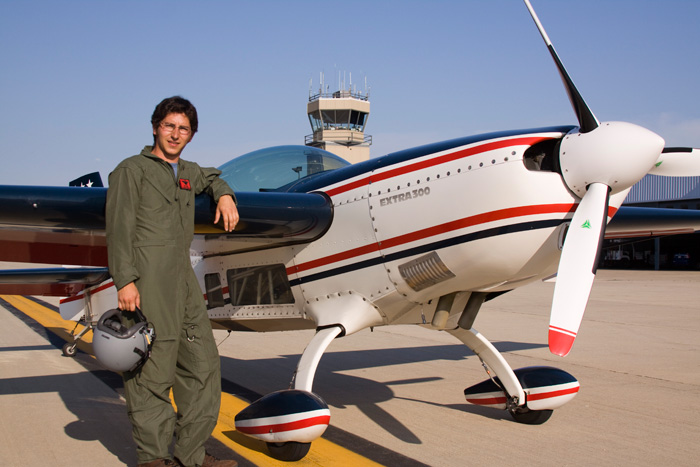
The Extra 300L, a two-place variant of the aircraft flown by such air show stars as Patty Wagstaff and Mike Goulian, covers the Unlimited-category aerobatic spectrum. Certified for +/-8 G’s when flown dual, Gauntlet’s Extra 300 course includes advanced vertical maneuvers, tumbling maneuvers, torque rolls and advanced spins. After demonstrating proficiency with Unlimited-category maneuvers, training is tailored to the individual pilot’s objectives.
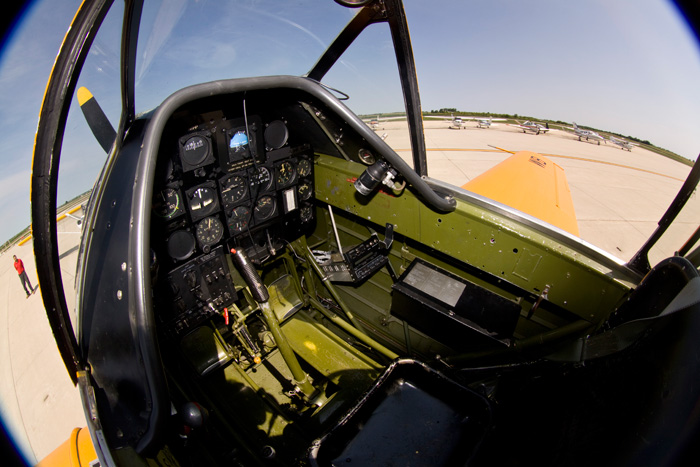
The WWII advanced trainer made by North American Aviation and known to various air forces as the T-6 Texan, AT-6, SNJ and Harvard provides entrée into the piston warbird world. Gauntlet offers both a transition and basic aerobatic course in its SNJ-6. Transition training typically takes five to 15 hours, depending on pilot experience and capability, and basic aerobatics usually requires 15 to 20 hours of flight time.
“I can’t say enough good things about the T-6,” Morris says. “Every time you fly it, it makes you work and makes you a better pilot.”
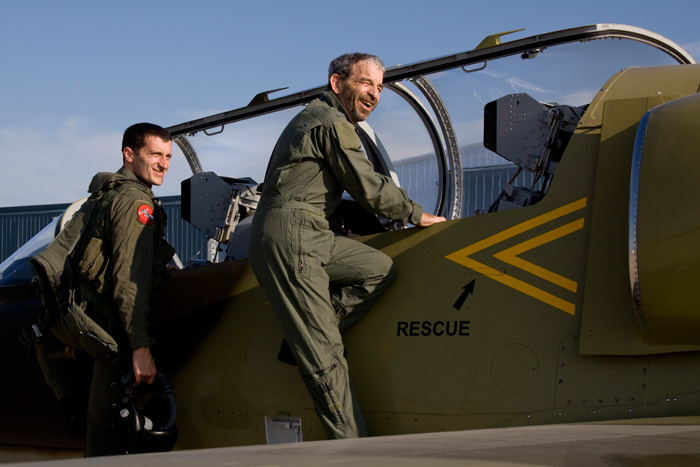
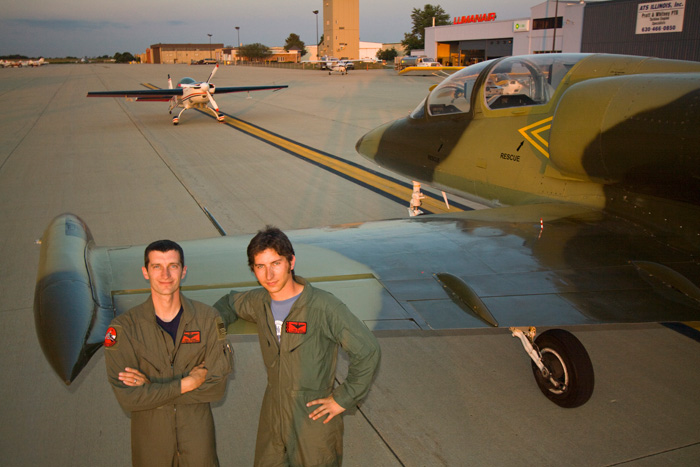
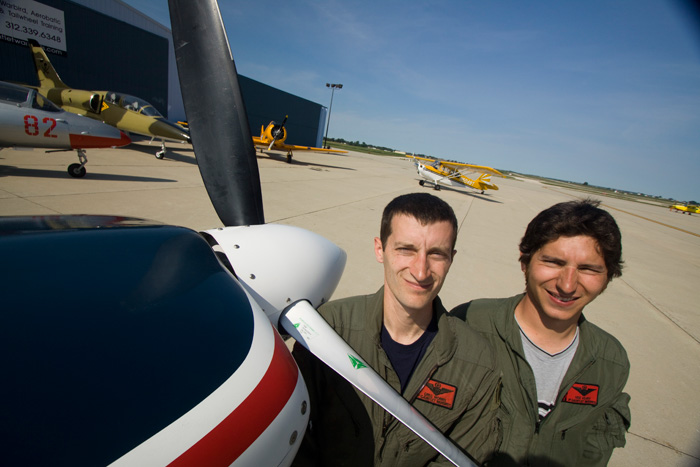
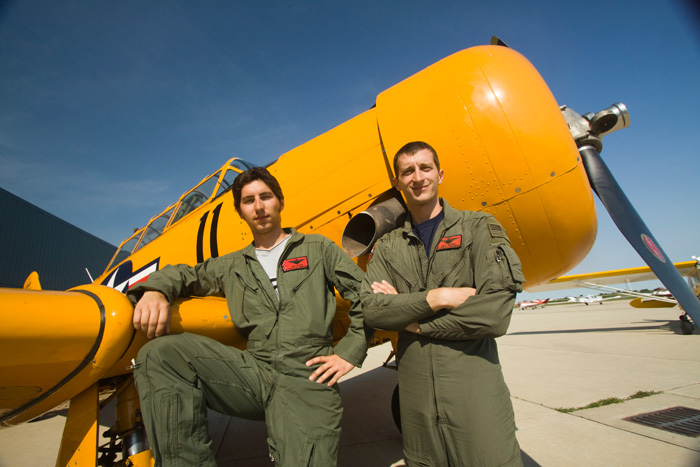
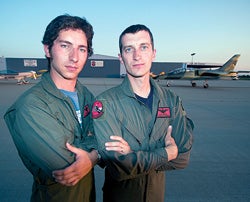 Vess Velikov (left) and Greg Morris (right) are two of Gauntlet’s highly experienced instructors. |
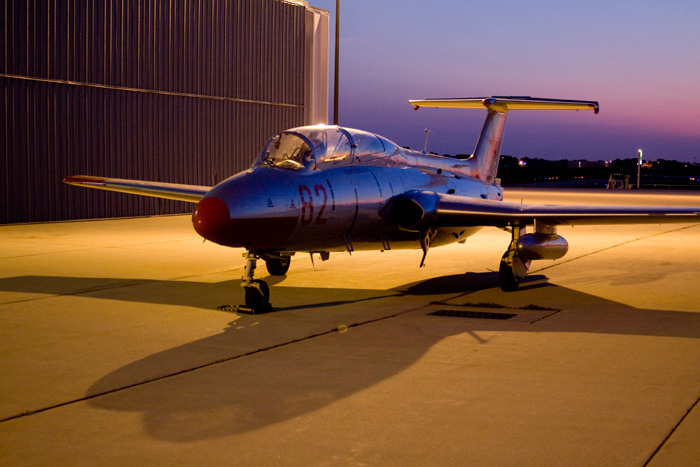
The Aero Vodochody L-29 Delfin and L-39 Albatros are the fleet’s flagships. Operated in the Experimental/Exhibition category, a Letter of Deviation Authority (LODA) from the DuPage FSDO allows their use for training. Students must have a private pilot certificate or better for instruction. The L-29, designed in the late 1950s, served in the air forces of all Warsaw Pact countries except Poland. Initially used as an advanced and weapons trainer, and later as a primary trainer, the L-29 is loud and a gas guzzler, but has the feel of a more advanced jet, despite its low-tech appearance.
“This is the first aircraft Russian military pilots would fly,” Morris explains. “It has a thick wing, almost like off of a Cherokee, and it only cruises at 250 to 280 knots, but it has the handling qualities they wanted.”
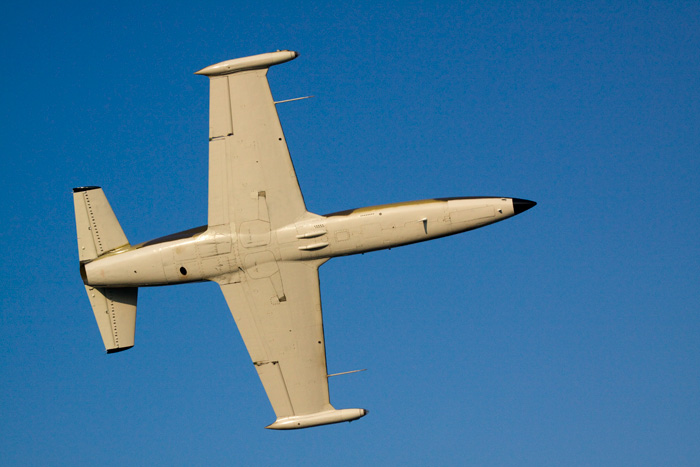
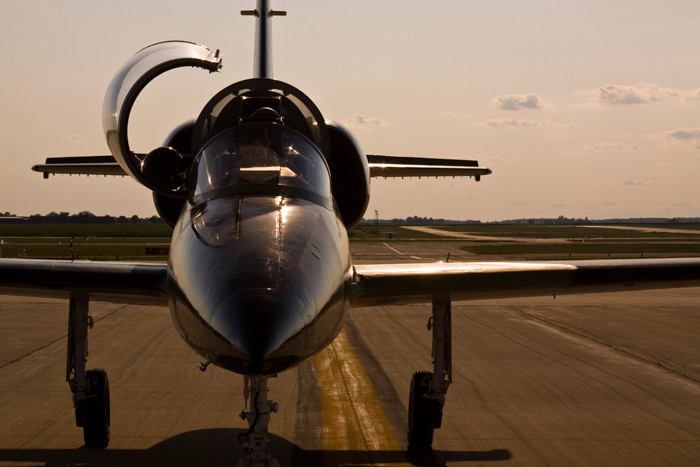
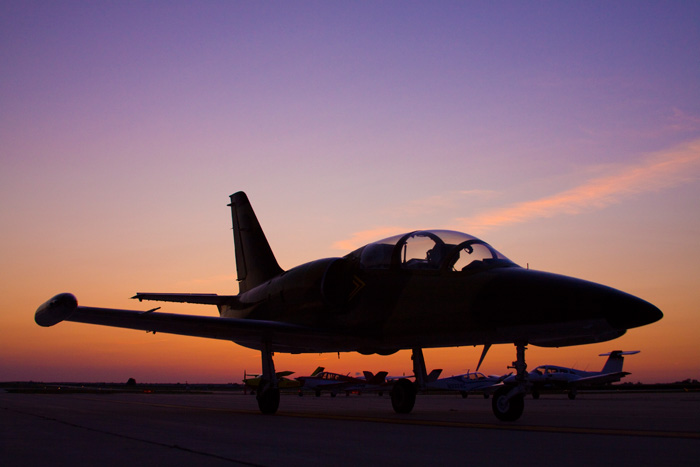
The L-39, successor to the L-29, has the needle-nosed look of a modern fighter. Air-conditioned, heated and pressurized, it’s also comfortable to fly. Introduced in the late 1960s, the L-39 has been used as both a jet trainer and light-attack aircraft, and is still flown by more than 30 air forces worldwide. Maximum speed is 490 knots, or Mach 0.8, and it has a +8/-4 G-load limit.
Gauntlet offers transition and unusual attitude training in both jets. The transition course covers basic aerobatics, unusual attitude recoveries, simulated flameouts and high-altitude operations. The unusual attitudes course includes stalls and recoveries in all attitudes, with an emphasis on achieving and maintaining corner velocity under G-loading, that is, minimizing airframe stress in an upset recovery.
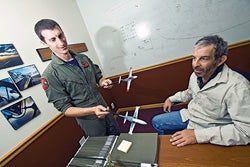 Morris preps author Jim Wynbrandt for their formation flight. |
Of course, a flight school can only be as good as its instructors, and Gauntlet has a highly experienced team of trainers in addition to Morris. Vess Velikov, who specializes in tailwheel and aerobatic instruction, has a degree in aviation from San Jose State, and has logged hundreds of hours in T-6s and vintage taildraggers, including Wacos and Stearmans. Dan Walton, an Embry-Riddle graduate, is active in aerobatic competition and has type ratings in several models of Citation and Gulfstream jets. Fred Bower, a former U.S. Air Force pilot, has experience flying aircraft from the U-2 to Boeing 737s, and currently flies for a major airline.
Rates for the aircraft range from $165 an hour for the Decathlon (instructor, an additional $75) to $1,700 per hour for the L-39. Gauntlet’s turnkey programs now draw students from as far as Europe and Australia who spend vacation time earning endorsements and type ratings that would be impossible or prohibitively expensive to get back home. But the school also aims to attract a local crowd with what Morris calls “the pure sport aviation pitch: Taking a half-day break from the wife or husband and kids, and just flying for an hour or an hour and a half in an aerobatic airplane or warbird, and going back home and having your life.”
That’s what brings Stewart, who has racked up about 150 hours in the two years he has been flying with Gauntlet. “This isn’t stuff you fly cross-country; this is stuff you go out and have fun in, and really learn to fly,” he says. “That’s the beauty of what Greg’s got here: You can go out and have these different experiences in all these different planes.”
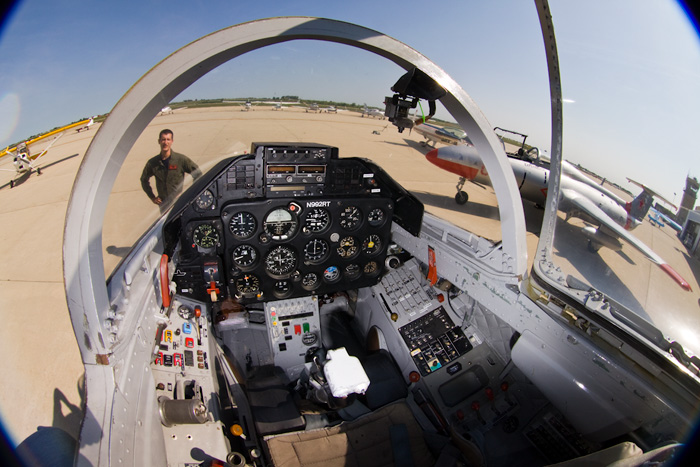
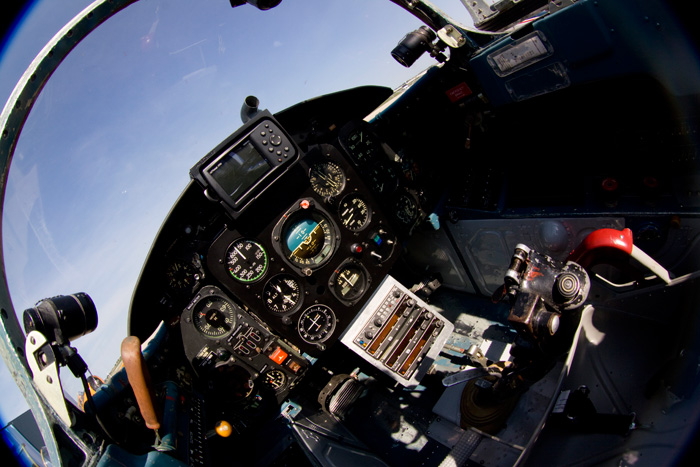
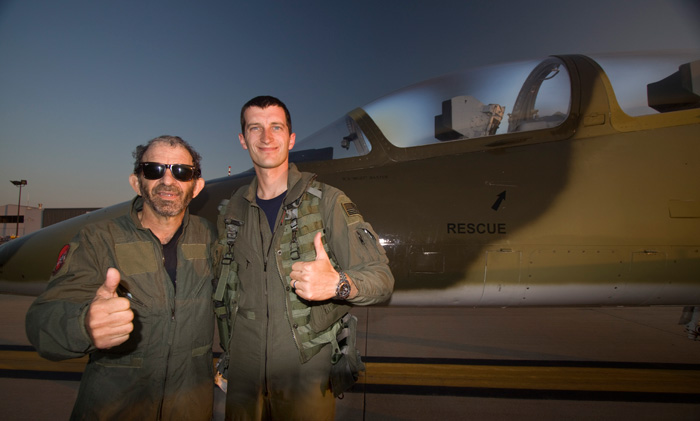
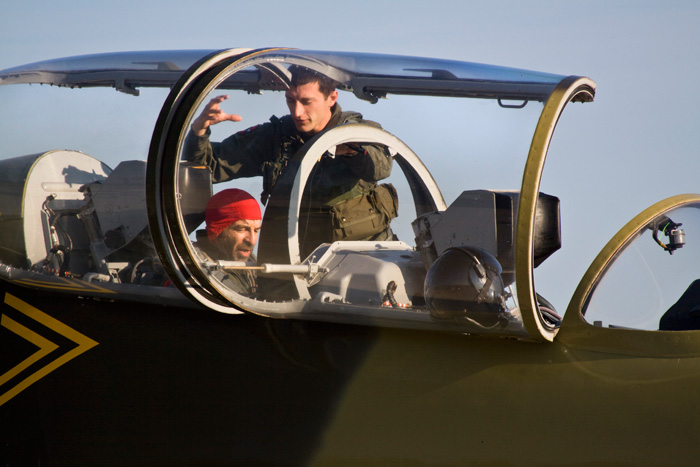
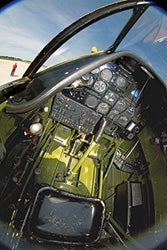 By this time, I’m feeling like a kid in a candy store myself. Given my choice of which ride looks sweetest, I select the L-39. After being outfitted with a flight suit, helmet and oxygen mask, we head for the flight line. I take the back seat, where all transition students sit on the first flight. Most of the original basic flight instruments have been swapped for Western equivalents, minimizing the Cyrillic characters, metric scales and other potentially confusing gauges found in some imported Eastern Bloc airplanes. Morris reviews the instruments, systems and flight controls. The profusion of knobs, switches, levers and dials is a little overwhelming, but the basics are easy to remember: Unless there’s an emergency, don’t touch the red knobs on the canopy ejection handle or the fuel-cutoff lever. Had I come for complete transition training, I would have received the syllabus and operating handbook in advance, and would have spent 15 to 20 hours studying the material beforehand.
“Basically, it’s just an airplane: stick, throttle and rudder,” Morris tells me. “Just fly the thing.”
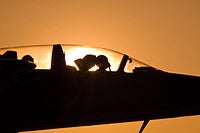
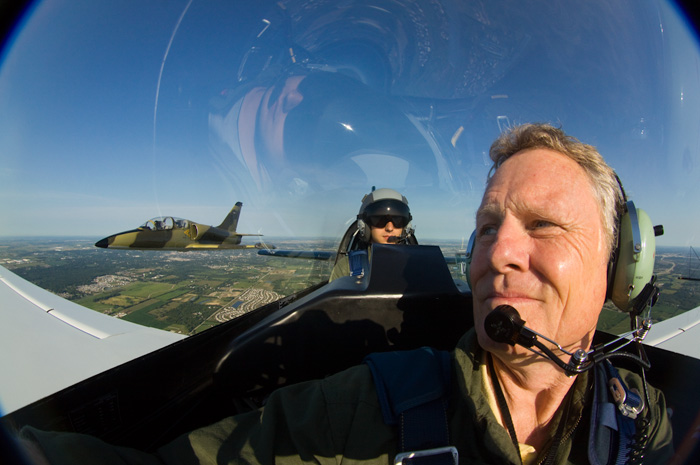
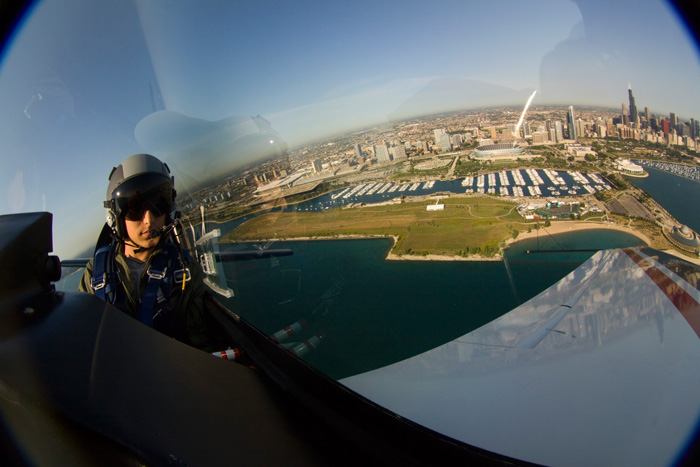
Strapped into our ‘chutes and buckled in with the canopy down, we go through the engine start and are soon taxiing to runway 27. Just rolling on the ground to the accompaniment of the turbine whine is a thrill. With half flaps (25 degrees), we power up, release the brakes and accelerate. Rotation is at 90 knots, and by 115 knots indicated, we’re airborne in a shallow climb. Once in the practice area a few miles west, Morris begins by demonstrating some of what the Albatros can do. On the ground, he had given me two sick sacks, so I figure he’s prepared to go full bore, and that’s fine with me. We do some vertical pull-ups, generating dynamic rates of climb of about 7,000 fpm and 4 G’s, then dive down, regaining dissipated airspeed. The sound of the air brakes being deployed and retracted to control airspeed punctuates our maneuvers. As we do rolls and loops, I’m overwhelmed by the alternating views of the ground and sky through the canopy, the three-dimensional performance, and the sheer exhilaration of the experience. This is nothing like any piston airplane I’ve ever flown.
Morris, like any good instructor, is concerned with how his student is enjoying the lesson. “How do you feel on a scale of 1 to 100?” he asks, as we momentarily right the jet to straight and level.
“One hundred and ten!” I answer.
(click on image for full resolution picture)
 |
 |
 |
 |
 |
 |
 |
 |
 |
 |
 |
 |
 |
 |
 |
 |
 |
 |
 |
 |
 |
 |
 |
 |
 |
 |
 |
 |
 |
 |


