
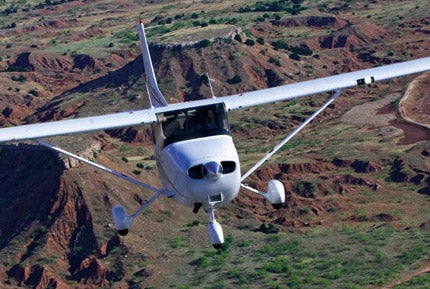
 To learn to fly is to step off the precipice of the ordinary and mundane. It’s a step into a new world that challenges your mind and senses, and rewards you like nothing you’ve ever dreamed of. To become a pilot is to see the face of our planet from the vantage point of angels.
All pilots share one experience: the deliberate decision to learn to fly. It’s the first step in a wondrous journey. In aviation, everybody starts from the beginning, for piloting must be learned and there are no shortcuts.
One fact must be clear from the very beginning of your journey to the air: We’re all student pilots. You’ll hear that time and time again because the more you learn about flying, the more you realize you don’t know. Earning your pilot certificate (the term is “certificate” and not “license”) only begins your education in flying. Aviators call it your “license to learn,” and so it is.
The Basics
As a beginner, you can earn one of three pilot certificates: private, recreational or sport. The private certificate is the most popular and useful; it’s the one to start with if you plan on adding more certificates and ratings. A private certificate allows you to fly anywhere you wish, carry multiple passengers and fly night or day. There are limitations as to the weather you may fly in, and additional endorsements are required to fly more complex airplanes (with retractable landing gear and higher horsepower, for example). This certificate gives you the most freedom as a pilot and is the traditional first step to a flying career.
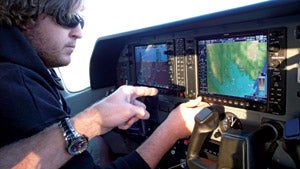 |
| Learning to fly requires dedication and hard work, but the rewards are well worth it. To ensure success, students should find an instructor that they work well with, in addition to a mentor that can provide inspiration. Training with the latest technologies, such as the Garmin G1000 glass-panel system (above), is a great way to learn and build confidence. |
The recreational and sport certificates are more limited and they restrict you in different ways. Both limit you to carrying one passenger in daytime operations only. The recreational certificate limits your traveling distance to 50 miles from your training airport, while the sport-pilot certificate restricts you to designated light-sport aircraft (LSAs). Although the private and recreational require valid FAA medical certification, the sport-pilot certificate does not.
You’ll often hear pilots talk about “ratings.” Ratings are like subcategories of the pilot certificate and define how a pilot can fly and in what type of aircraft. An “instrument” rating allows a pilot to fly with reference to only instruments when in clouds or when the ground can’t be seen. A multi-engine rating allows a pilot to fly an aircraft with more than one engine. Ratings are added to the pilot certificate, and there are several.
What Are The Requirements?
To earn your private certificate, you must be at least 17, though you can “solo” (fly without an instructor) at 16. Federal regulations require 35 to 40 hours in the air, divided between different types of flying (i.e., night, solo, cross-country, etc.). You must pass an FAA written exam as well as a medical exam performed by a doctor specializing in aviation medicine. Finally, you must pass a practical exam demonstrating your skills in the airplane with a pilot examiner on board.
 Is It Safe?
The media isn’t kind to aviation. If you watch the news or read the newspaper on a regular basis, you might think flying is dangerous. It seems like “little airplanes” are crashing all the time. The truth, however, paints a different picture.
According to the National Transportation Safety Board (NTSB), there were 43,443 fatal motor vehicle accidents in 2005. During the same year, there were 562 fatal general aviation (GA) accidents. It may be interesting to note that there were 697 fatal recreational boating accidents that same year.
While it’s difficult to precisely compare aviation risk to motor vehicle risk, research proves that flying is safer than it may seem. At its worst, flying may be on par with riding a motorcycle. If you eliminate accident factors you should never encounter (like flying intoxicated, irresponsibly or into bad weather), flying becomes even safer. Instructional flying is the safest of all GA flying. Every minute of your training will go toward making you a safe pilot. The entire aviation curriculum is focused on safety. Advances in aircraft, technology, weather prediction and reporting, navigation and communication make flying safer today than it has ever been.
| Top 10 Online Resources The Internet is a vast resource of excellent information for beginning pilots. Here, we give you our top 10. |
|||
| http://flighttraining.aopa.org | AOPA’s Website includes “Project Pilot,” which helps fledgling pilots find an aviation mentor during training. There are tons of free features and resources. |
||
| www.faa.gov/pilots/become | The FAA’s site for beginning pilots includes links to a free online AIM (Aeronautical Information Manual), a variety of student-pilot statistics and detailed requirements. |
||
| www.learntoflykit.com | By signing up for Plane & Pilot‘s free Learn To Fly Kit, you’ll receive materials and information that will guide you as you start your path toward pilot certification. | ||
| www.landings.com | This aviation portal is a gateway to all things aviation. From breaking aviation news to sources for pilot supplies, this is a great starting point. | ||
| www.faa-ground-school.com | This fantastic resource has free online ground-school courses and much more. | ||
| www.liveatc.net | Live ATC feeds allow you to listen to real communications between pilots and some of the country’s busiest controllers. | ||
| www.mywrittenexam.com http://mypilottests.com |
Both sites offer free practice FAA written exams. | ||
| www.airnav.com | An online directory of airports, navigational aids and flight-planning aids, all free. | ||
| http://av-info.faa.gov/pilotschool.asp | The FAA’s search tool for pilot schools. | ||
| www.geocities.com/cfidarren | Darren Smith is the certified flight instructor who runs this site. It’s a huge repository of good information. His “links” page alone will keep you busy for days. | ||
How Long Will It Take?
Learning to fly is a funny thing; it gives back only what you put in. You can’t “fake” your way through flight instruction with minimum effort. Piloting demands your very best, so you must make up your mind that you’ll be dedicated to this thing called flying.
Experience shows that taking a minimum of two or three lessons per week is the best way to become a pilot. There are “total immersion” programs available where you fly every day—sometimes twice a day—and finish faster. Stretching out your training too much makes it difficult to retain your flying skills. Repeating lessons increases your costs and leads to frustration. Many a pilot-to-be has quit because she or he took too long and lost interest.
Though the FAA requires only 40 hours in the air, in practice, few people earn a certificate that quickly. The national average is between 60 and 70 hours. Flying four times a week, you could earn your certificate in about three months. If you remember that everyone learns at a different pace, you’ll be less likely to compare your progress to someone else’s.
 How Much Will It Cost?
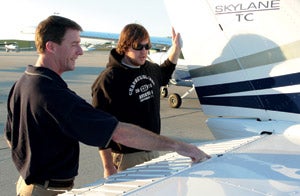
You’ll pay an hourly rate for both the airplane and instructor. Most schools typically schedule a two-hour block per lesson that includes a preflight briefing, flight instruction and postflight review. Hourly rates depend on the type and size of airplane chosen for training and the part of the country you live in. A newer, fully equipped four-seat trainer in Los Angeles will be more expensive than an aged two-seater with basic instruments in the Midwest. Instructor rates vary equally.
You’ll need materials and equipment to augment your flight training. You can save a lot of money by being frugal in this area. Headsets can be borrowed or purchased used on eBay. Learning materials can be found at a library or perhaps a used bookstore. Fancy sunglasses, watches and jackets are unnecessary. There are only a few basics you need.
You can safely expect to spend between $6,000 and $9,000 total to earn your private certificate. The wide swing is due to variables like fuel cost, airplane size, learning ability, geographic location, frequency of training, etc. There are programs available that offer a fixed-cost package as long as you learn at their pace. Airline fast-track curricula also are available that give a discount for including several certificates and ratings in one package, done back-to-back and full-time.
Where Do I Go To Learn?
Start by visiting your local airport. Nearly every airport has a flight school on the field. In pilot parlance, these are called FBOs (which stands for fixed-base operators). The differences between FBOs are as numerous as airports themselves. There are tiny schools with just one airplane or huge schools with fleets of airplanes. At one FBO you’ll find scores of young instructors working toward airline and corporate jobs, while at another you’ll find a seasoned veteran or two instructing because they love to teach. Each has its merits.
At some airports, there are control towers and multiple runways, while at others, you may find a single grass runway with no tower at all. Some schools teach in high-wing airplanes and some in low-wing. While pilots forever argue the benefits of each, in the end it makes little difference. All pilots must pass the same tests and meet the same requirements before they become certified.
What’s It Like?
Typically, students start with a familiarization flight in which the basics of flight are introduced. An instructor will review the school’s training syllabus and what will be expected of you. You’ll be given direction as to what additional materials you’ll need and go through an identification/security process.
Once you’ve begun training, you’ll arrive at the airport having read and studied a specific area of aeronautical knowledge. Your instructor will brief you on what you’ll cover in the air that day. In aviation, you must perfect both aeronautical knowledge and physical flying skill.
For each lesson, you’ll take to the sky in the pilot’s seat. You’ll spend about an hour practicing different maneuvers and procedures with your instructor. Your mind will fill with new knowledge, and you’ll race to absorb it all. The exhilaration and adrenaline you’ll feel is unparalleled!
As time goes on, you’ll become one with your craft and effortlessly control your airplane, work the radio, navigate and maintain spatial awareness—all at once. When your instructor feels you’re ready, you’ll be set loose in the airplane, all alone, to complete your first solo flight—an important rite of passage.
You’ll spend many hours flying “cross-countries” (flying to an airport at least 50 miles away). You’ll experience night flying, flying by instruments, flying in wind and a dozen other things.
Once you’ve passed the written exam and fulfilled your flight-time requirements, you’ll take your checkride, the last milestone of the pilot certificate. There, your aviation knowledge and flying skills will be tested and evaluated by a special FAA pilot examiner. If you pass his or her careful scrutiny, you’ll be awarded your pilot certificate.
| What You Really Need Forget the gadgets and gizmos that tempt you as soon as you begin flight training. In addition to the training syllabus recommended by your school, you’ll need only a few basics: |
|||
| Item | Cost | Comments | |
| Logbook | $6–$25 | Where you track your flight time, flight instruction and instructor endorsements. The price reflects workmanship more than utility. | |
| Headset | $100–$1,000 | Personal preference plays a big part here. These protect your hearing and allow you to communicate with ATC. | |
| Sunglasses | $10 and up | Though glare and ultraviolet radiation when flying are real issues, special sunglasses aren’t necessary. Whether cheap or expensive, look for UV protection and comfort. | |
| Plotter | $6–$15 | A plastic ruler device used for laying out navigation courses. | |
| E6B computer | $8–$75 | This device allows you to perform various aviation calculations. You can buy a manual version or the electronic, calculator-like one. | |
| Charts | $8 | Pilots call maps “charts.” You’ll need a sectional chart for your flight-training area. Your instructor will guide you here. | |
| Airport/Facility Directory (A/FD) | $5 | A special directory of all airports and landing sites in your geographical area. You’ll use it during cross-country navigation. | |
| Flight bag | $20–$150 | A place in which to carry all your stuff back and forth to the airplane. It can be a small backpack or fancy case, but make sure it’s light, durable and fits into small areas. | |
| Aeronautical Information Manual (AIM) | Prices vary | A pilot’s “Bible.” It contains the officially recognized procedures used by pilots. These come out yearly. | |
| Pilot’s Operating Handbook (POH) | $45–$90 | This is like the “owner’s manual” for your training airplane. You’ll need one specific to your airplane. | |
What About The Flight Instructor?
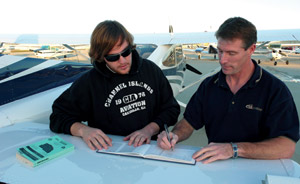
The student/flight instructor relationship is a critical part of your flying experience; finding the right instructor is key. It’s a shame that many students quit because they don’t work well with their instructors, when that can be easily corrected.
Every student learns differently. A great instructor for one may not be great for another. Take your time to shop around and find the right instructor. Use the time-honored method of “hanging around the airport.” Check bulletin boards and online forums, ask line personnel and talk to pilots. All pilots have opinions and are happy to share them with beginning students. Good instructors become known.
Interview prospective instructors. If an instructor balks at that, drop him or her right away. Good instructors know they need to click with their students and will go out of their way to ensure a good match. Ask open-ended questions about methods of teaching, what will be expected of you and what they believe makes a successful flight relationship.
If you aren’t working well together, find another instructor immediately. Egos don’t have a place in aviation, and instructors shouldn’t take your switch personally. Maintain a professional and polite attitude, communicate clearly and never settle for “good enough.”
Then What?
Whether you’re seeking a lifelong career or just want to become a pilot to quiet a call deep inside, these first steps are the same. From here, the sky literally is the limit, and what a big sky it is. You have thus joined the select few souls who have tasted flight and have begun a journey both adventurous and bold. You have taken the first step to truly knowing yourself.
You want to learn to fly? Take heed of that desire. That’s your soul speaking to you—a call that won’t ever stop. You have been touched by the sky itself. Aviation pioneer Otto Lilienthal described it well when he said, “To invent an airplane is nothing. To build one is something. To fly is everything.”
 8 Tips For Training Success
Flight training can be tough. These simple tips will give you the best chance for success.
1. Choose the right instructor. Ask around about good instructors because your instructor will set the bar for all flying to come. Don’t be in a rush to get started. Interview them to get a feel for their personality. Set a limit (say, three lessons) after which you’ll both reevaluate your relationship. Don’t base your selection on age, gender or appearance
2. Find a mentor. A mentor is a trusted counselor or guide. In aviation, it’s another pilot you can talk to who will keep you motivated and help you with frustrations during training. Experience shows that students with mentors succeed at a higher rate than those without. AOPA sponsors “Project Pilot” where you can find a mentor online. (See “Top 10 Online Resources” sidebar for more information.)
3. Fund your training in advance. The number-one reason students quit is because they run out of money. Secure all the funds for your training before you begin (overbudget by $1,000) and you won’t have to lose momentum because of financial issues.
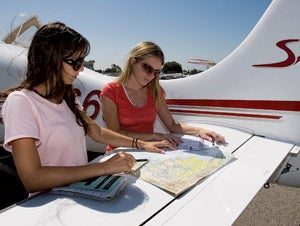
4. Prepare. Ask any instructor what the secret to flight-training success is, and he or she will answer, “student preparation.” Start your book learning before you begin flight training. Buy a basic aviation manual and get used to the concepts and terminology. Once you’re training, study before each lesson.
5. Don’t give up. There will be dark times in your pilot journey. Instructors know about learning plateaus and points of frustration (especially when learning to land). Make the decision now to continue training when you hit those stumbling blocks later. Know they’re coming and that you’ll overcome them with practice and determination.
6. When it gets stale, switch. There will be times when you feel you aren’t progressing. During those times, fly with another instructor for a session or two. Your original instructor shouldn’t mind, and you’ll be amazed what a fresh perspective does for your flying.
7. Keep it regular. Don’t take long breaks during training. Keep the pace at two or three lessons per week. Schedule training to coincide with the mildest weather in your area, typically spring or fall.
8. Talk the talk. Radio work is a tough barrier for many students. Use a handheld scanner or one of the many Internet live ATC radio feeds to listen and learn. Practice radio work at home to get rid of radio fright and boost your confidence.


