











 |
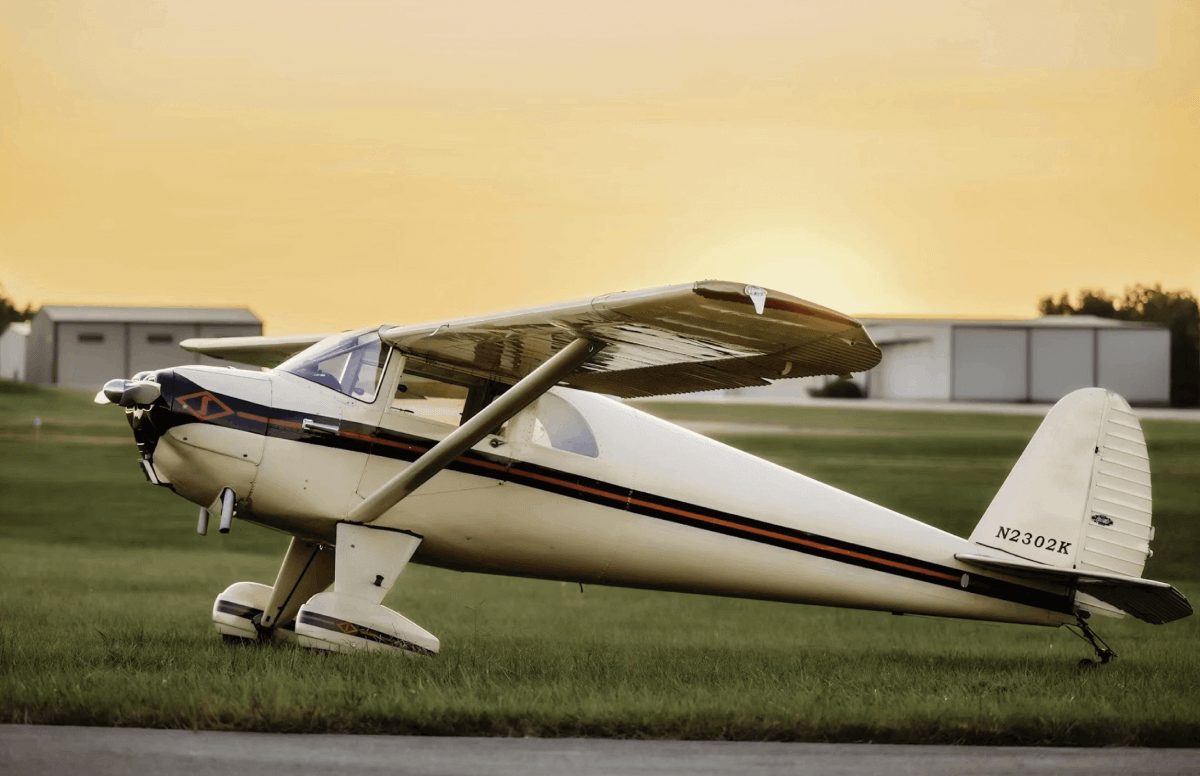
| STANDARD DATA: Seats 4. Gross wt. 2,450. Empty wt. 1,380. Engine 145-hp Warner Scarab radial. PERFORMANCE: Top mph 162. Cruise mph 150. Stall mph 50. Initial climb rate 1,000. Range 472. Ceiling 18,000. |
Clyde Cessna first entered the light plane market on his own in 1927. Between the years of 1928 and 1930 he produced a series of airplanes that were remarkably clean and efficient. The final manifestation of this series was the Cessna AW, a four-seat cabin monoplane utilizing the 125-hp Warner Scarab engine followed by the BW. The Depression caught up with Cessna in 1930, forcing the factory to suspend production; however, in 1933, Cessna was back in business again, this time with a much improved version of the AW, featuring an improved landing gear and a 145-hp engine. This first model, designated the C-34, was possibly the most efficient airplane in its class, and nearly 100 were built. The C-145 Airmaster is basically a modified C-34 featuring revised flaps and a wider gear. In 1932, the Airmaster was made available with the 165-hp Super Scarab, and the line continued in production until 1942.