












 |
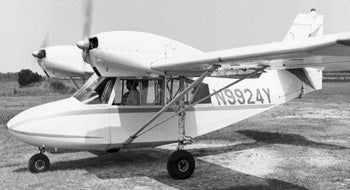
| STANDARD DATA: Seats 2. Gross wt. 2,450. Empty wt. 1,790. Fuel capacity 60. Engines two 100-hp Continentals. PERFORMANCE: Top mph 130. Cruise mph 120. Stall mph 62. Initial climb rate 642. Range 510. Ceiling 12,900. Takeoff run 500. |
The Champion Lancer was (during its production run) the least expensive twin produced in this country. Champion’s aim was to offer a twin with design simplicity, easy maintenance, and low operational costs. The Lancer was also designed to handle unimproved landing strips. It flew for the first time in 1961, but production didn’t start until 1963. Several revisions were made in the interim including the relocation of the engine nacelles to a position above the wing. Construction of the Lancer was all-metal with a fiberglass covering. Thirty-six Lancers rolled off the production line in the first year.