











By Meg Godlewski
It is a VFR day, and it sure looks like you have the sky to yourself when suddenly the ADS-B comes alive with “Traffic. 12 o’clock, 2 miles. Same altitude.” You look around frantically but don’t see the other aircraft. Or maybe you’re in cruise flight in what appears to be an empty sky when suddenly you see the traffic off your wing at the same altitude. As you take action to avoid the other aircraft, you wonder why the ADS-B that you paid thousands of dollars for didn’t utter a sound or provide a visual annunciation warning.
Can you relate to these scenarios?
Automatic dependent surveillance-broadcast, or ADS-B, became law in January 2020, ostensibly to make the skies safer—but has it worked? Researchers from Embry-Riddle Aeronautical University are asking pilots to fill out a survey about their use of ADS-B to help determine if and how pilots are using the technology, and if it has helped curtail the number of midair accidents.
“We want to determine how effective ADS-B is in reducing the number of midair collisions in general aviation,” said Douglas Boyd, Ph.D., an adjunct research professor at Embry-Riddle.
Boyd holds several pilot certificates and has more than 1,500 hours of flight time. He and a colleague are studying midairs in hopes of finding a way to mitigate them. According to Boyd, how a pilot uses ADS-B is key.
“Where do they get their annunciations? Is it from the panel or from their iPad? Where is the iPad in the cockpit, and so forth,” Boyd said.
There are 15 questions on the survey, one of which asks how often pilots have received a warning about traffic and not been able to visually acquire it outside the airplane.
“There has been a large number of responses from pilots who experienced this,” saod Boyd.
Some pilots are also surprised to learn that non-ADS-B aircraft will show up on ADS-B some three to 13 seconds after the radar beam sweeps over them, then the pilot receives a traffic advisory from the ADS-B, but it may not be helpful.
“The aircraft can go a long way in those 13 seconds,” said Boyd.
The survey takes about five minutes to complete, and the window to do so will be open until the end of October.
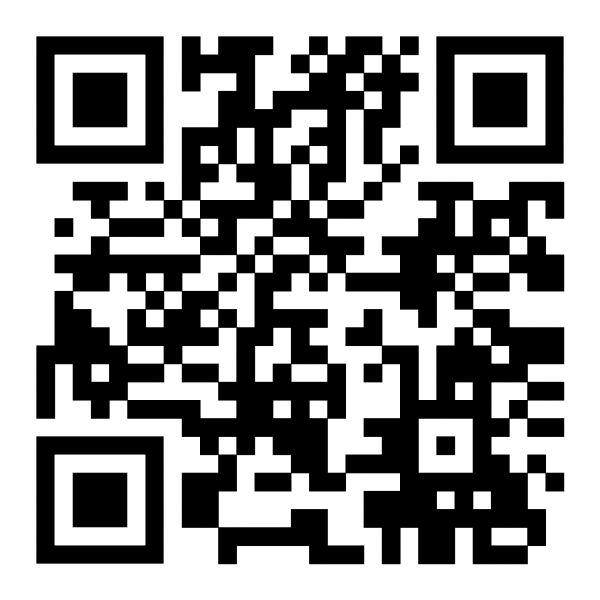
To take the survey, scan the QR code below or visit www.surveymonkey.com/r/PR3GPJS.